Megafold Legio#
The famed Noise Engineering wavefolder paired with waveshaping, envelope following, and a wavefold chorus
Overview#
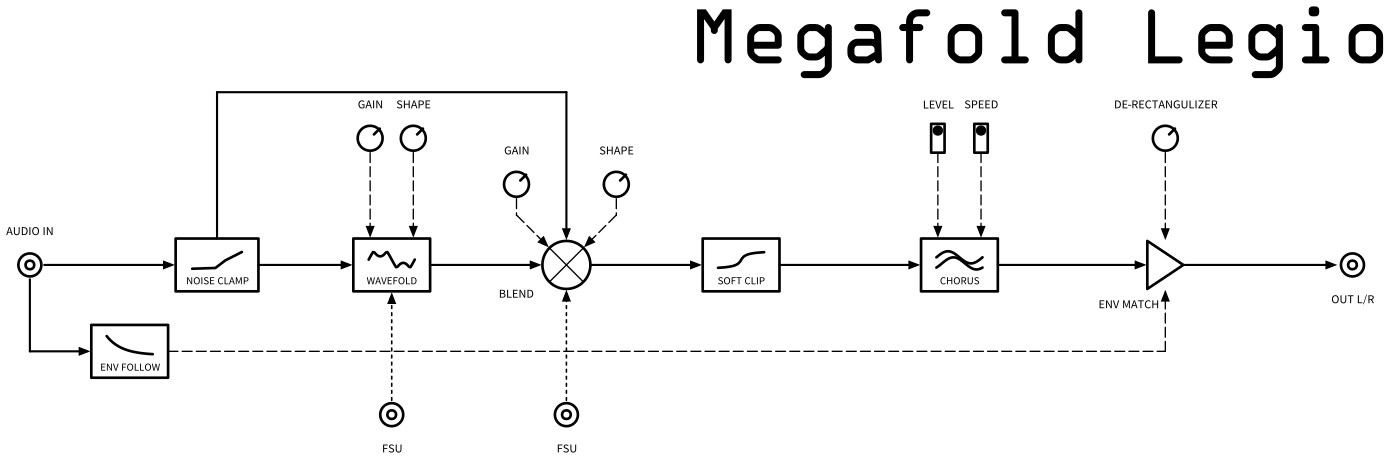
Megafold Legio takes the classic Noise Engineering wavefolding algorithm and opens it up to any signal in your system. CV-controllable gain and shape controls open up plenty of timbre-shaping opportunities, and an input envelope follower allows expressive signals to retain their dynamics. Finally, a unique stereo algorithm answers an important question from Stephen: what if a chorus was made out of wavefolders?
- Type: Wavefolder/waveshaper
- Size: 6 HP
- Depth: 1.5 inches
- Power: 2x5 Eurorack
- +12 V:
140mA - -12 V:
22mA
Etymology#
Megafold -- from Latin: "Large, bend”
Legio -- from Latin: “legion, army”
“Lots of big bends”
Color code#
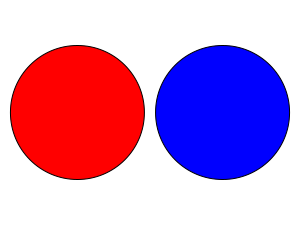
On boot, the Legio's LEDs will shine with this color pattern to indicate that it is running the current Megafold firmware:
Power#
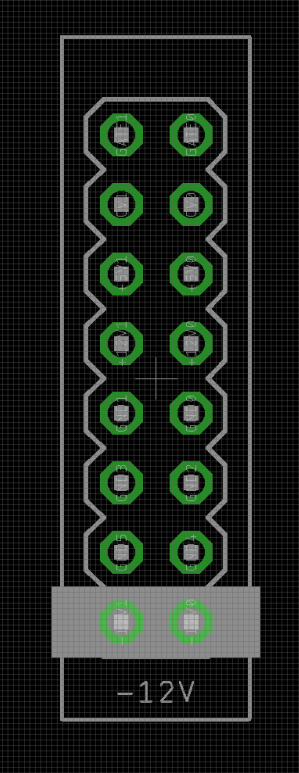
To power your Noise Engineering module, turn off your case. Plug one end of your ribbon cable into your power board so that the red stripe on the ribbon cable is aligned to the side that says -12 V and each pin on the power header is plugged into the connector on the ribbon. Make sure no pins are overhanging the connector! If they are, unplug it and realign.
Line up the red stripe on the ribbon cable so that it matches the white stripe and/or -12 V indication on the board and plug in the connector.
Screw your module into your case before powering on the module. You risk bumping the module's PCB against something metallic and damaging it if it's not properly secured when powered on.
You should be good to go if you followed these instructions. Now go make some noise!
Noise Engineering modules are reverse protected. If you accidentally installed it with the red stripe up, simply remove the power and place it correctly.
A final note. Some modules have other headers -- they may have a different number of pins or may say "not power". In general, unless a manual tells you otherwise, do not connect those to power.
Input & output voltages#
Legio’s CV-modulation inputs expect signals from 0v to +5v.
The Envelop input’s range is -2v to +5v.
The FSU input responds to a rising edge around +1.6v.
The audio inputs are AC coupled and respond to any Eurorack audio signals.
The audio output can reach up to 16v peak-to-peak.
Interface#
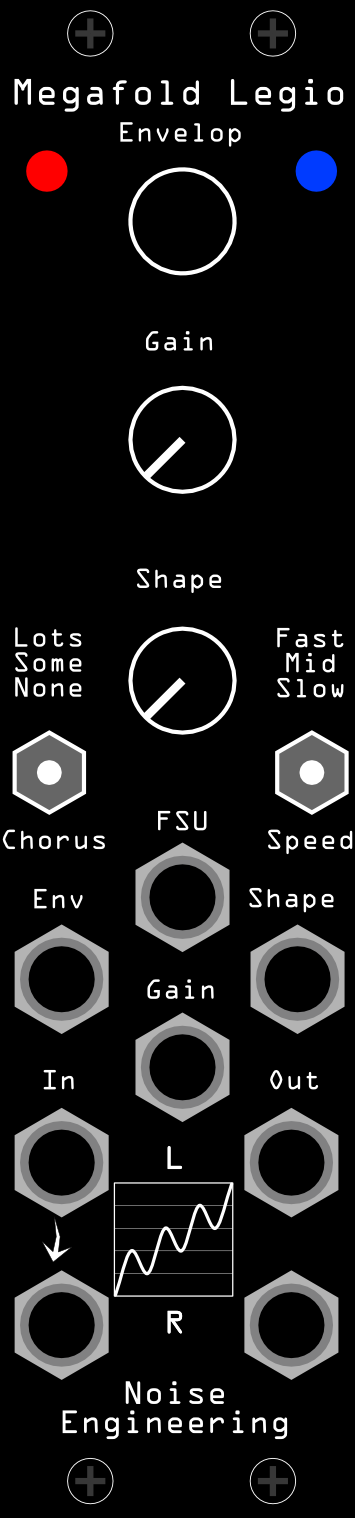
- Envelop (encoder+CV input)
- Controls the amount that an input envelope follower is applied to the output (think of it enveloping the output).
- Gain (potentiometer+CV input)
- Sets the amount of gain into the wavefolder.
- Shape (potentiometer+CV input)
- Sets the shape of the wavefolding.
- Chorus (switch)
- Sets the amount of chorusing; the chorus is achieved with multiple stereo-spread copies of the wavefolder that are modulated by phase-offset LFOs.
- Speed (switch)
- Sets the rate of the chorus LFOs.
- FSU (gate input)
- Distortion to the max when a high gate is applied here.
- In L/In R
- Audio input. The L jack is normaled to the R jack if R is left unpatched.
- Out L/Out R
- Audio outputs.
Patch tutorial#
Set all parameters to minimum and patch in a sine wave or other simple waveform. Adjust Gain and Shape and explore how the folder can affect a signal.
Turn up Chorus and play with Speed to add some width.
Patch in a dynamic signal like a synth voice or a drum loop and use Envelop to retain the dynamics of your input signal.
Signal flow#
Warranty#
We will repair or replace (at our discretion) any product that we manufactured for one year after initial purchase as long as we are able to get the parts to do so. This warranty does not apply to normal wear and tear, including art/panel wear, or any products that have been modified, abused, or misused. Our warranty is limited to manufacturing defects.
Warranty repairs/replacements are free. Repairs due to normal wear, user modification, or other damage are charged at an affordable rate. Customers are responsible for the cost of shipping to Noise Engineering technicians for repair.
All returns must be coordinated through Noise Engineering; returns without a Return Authorization will be refused and returned to sender.
For immediate issues with new modules, please contact your dealer for a replacement. Otherwise, please contact us if you think one of your modules needs a repair.
Design Notes#
Never have we made a module when Markus didn't request we put a wavefolder on it. This is for them.
Special thanks#
- Enthusiastic Electrons
- Everett Dolgner
- Frequency Divide
- itsMasterIll
- Ozon
- starthief