Chasma Legio#
Mid/side dynamics processor with compression, limiting, and two flavors of distortion.
Overview#
Chasma Legio is a mid/side dynamics processor offering individual dynamics modification of the center and stereo portions of a patch. This allows for precise control over width without losing punch: for example, compress the mid portion to add some punch to a mix, and limit the sides to increase the stereo field, then add some gentle distortion to glue a full mix together. Or, embrace the chaos with CV-controlled width of stereo processors and really make your patches pop.
- Type: Mid/side dynamics processor
- Size: 6 HP
- Depth: 1.5 inches
- Power: 2x5 Eurorack
- +12 V:
140mA - -12 V:
22mA
Etymology#
Chasma -- from Latin: "chasm”
Legio -- from Latin: “legion, army”
“Lots of chasms”
Color code#
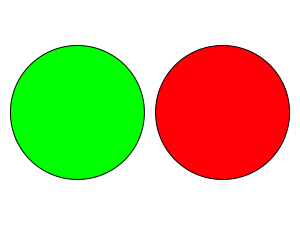
On boot, the Legio's LEDs will shine with this color pattern to indicate that it is running the current Chasma firmware:
Power#
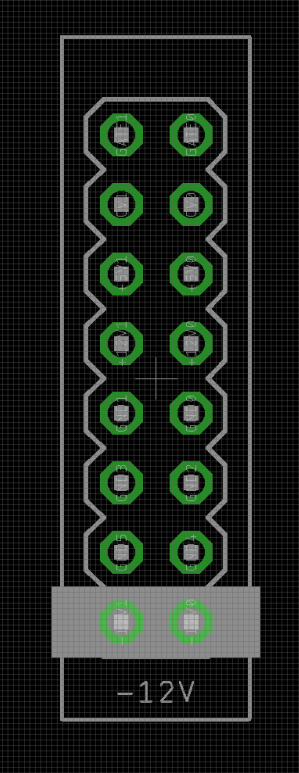
To power your Noise Engineering module, turn off your case. Plug one end of your ribbon cable into your power board so that the red stripe on the ribbon cable is aligned to the side that says -12 V and each pin on the power header is plugged into the connector on the ribbon. Make sure no pins are overhanging the connector! If they are, unplug it and realign.
Line up the red stripe on the ribbon cable so that it matches the white stripe and/or -12 V indication on the board and plug in the connector.
Screw your module into your case before powering on the module. You risk bumping the module's PCB against something metallic and damaging it if it's not properly secured when powered on.
You should be good to go if you followed these instructions. Now go make some noise!
Noise Engineering modules are reverse protected. If you accidentally installed it with the red stripe up, simply remove the power and place it correctly.
A final note. Some modules have other headers -- they may have a different number of pins or may say "not power". In general, unless a manual tells you otherwise, do not connect those to power.
Input & output voltages#
Legio’s CV-modulation inputs expect signals from 0v to +5v.
The Dist input’s range is -2v to +5v.
The FSU input responds to a rising edge around +1.6v.
The audio inputs are AC coupled and respond to any Eurorack audio signals.
The audio output can reach up to 16v peak-to-peak.
A brief introduction to mid/side processing#
Mid/side processing takes a stereo mix and splits it into two signals: the mono part (mid), and everything else (side).
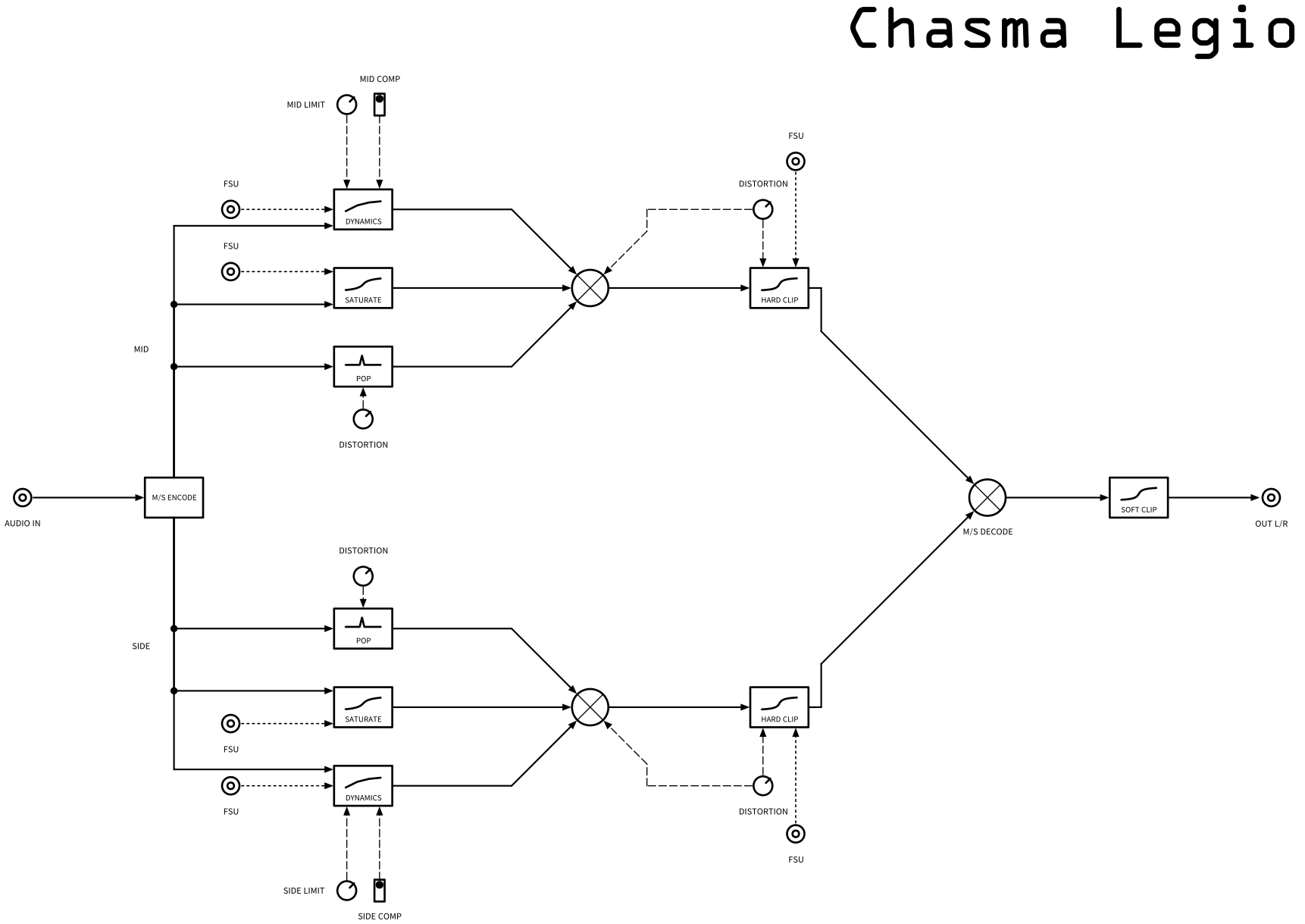
Mid is derived by summing the left and right signals, and side is derived by subtracting left and right. Once encoded, mid and side can be processed separately. After processing, they can be re-encoded into L/R stereo signals by summing mid and side for the left channel, and subtracting side from mid for the right channel. There is a bit of gainstaging to keep things at the same levels, too: -6dB on encode, and +6dB on decode.
This allows for interesting mixing techniques. Turning up or compressing the side signal can greatly increase the perceived stereo width of a mix. Compressing only the mid signal can increase the punchiness of percussion, for example, without introducing excessive compression artifacts on spacial processors.
While it's possible (and encouraged!) to patch a mid/side encode/decode matrix from scratch, Chasma gives you a simple, all-in-one tool. And while it excels as a bus processor at the end of a patch, it's also a fun experimental tool with mild-to-wild distortion and CV over the most dramatic parameters.
Interface#
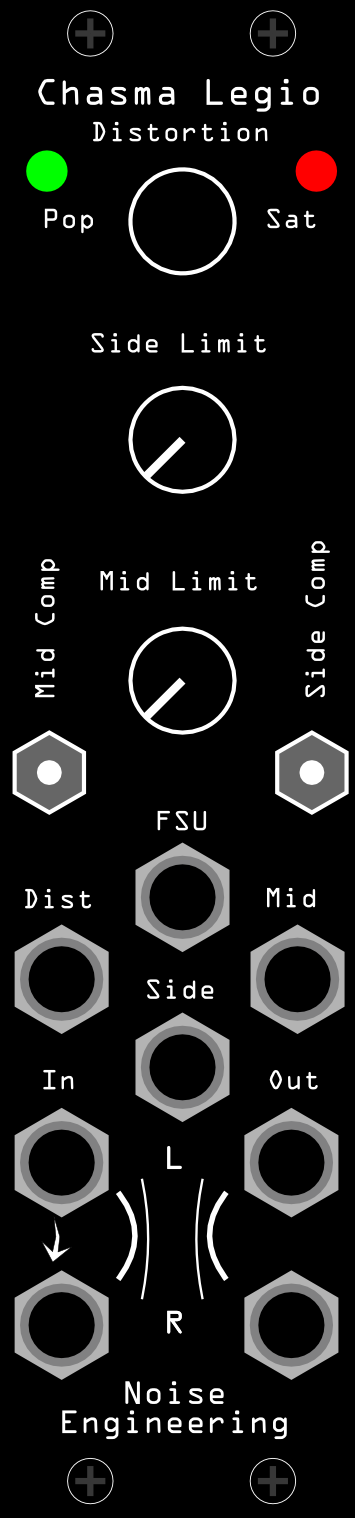
- Distortion (encoder+CV input)
- Adds saturation when turned clockwise, or zero-crossing pop distortion when turned counterclockwise.
- Tap to reset to no distortion.
- Side Limit (potentiometer+CV input)
- Increases the amount of gain into the side limiter.
- Mid Limit (potentiometer+CV input)
- Increases the amount of gain into the mid limiter.
- Mid Comp (switch)
- Three levels of compression applied to the mid signal; up is more.
- Side Comp (switch)
- Three levels of compression applied to the side signal; up is more.
- FSU
- Apply a gate here to really kick things in gear.
- In L/In R
- Audio inputs. The L jack is normaled to the R jack if R is left unpatched.
- Out L/Out R
- Audio outputs.
Patch tutorial#
Start with the distortion off, and the pots and switches at minimum.
Patch a dynamic signal with lots of stereo content -- for example, a drum loop into a reverb -- to Chasma's inputs.
Play with the Mid Limit and Side Limit parameters to explore how mid/side processing affects the stereo field.
Add in some compression with the switches.
Try out the different flavors of distortion with the encoder.
Patch a rhythmic gate to FSU to add in some wild, tempo-synced distortion!
Signal flow#
Warranty#
We will repair or replace (at our discretion) any product that we manufactured for one year after initial purchase as long as we are able to get the parts to do so. This warranty does not apply to normal wear and tear, including art/panel wear, or any products that have been modified, abused, or misused. Our warranty is limited to manufacturing defects.
Warranty repairs/replacements are free. Repairs due to normal wear, user modification, or other damage are charged at an affordable rate. Customers are responsible for the cost of shipping to Noise Engineering technicians for repair.
All returns must be coordinated through Noise Engineering; returns without a Return Authorization will be refused and returned to sender.
For immediate issues with new modules, please contact your dealer for a replacement. Otherwise, please contact us if you think one of your modules needs a repair.
Design Notes#
Chasma has been lurking in out unfinished pile for a long time. Stephen is really excited about the concept of a mid-side, so it's been on his personal todo list for a while. In around 2020, we prototyped a dedicated mid-side module. It was great, but several other people released similar products and we didn't think ours added that much to the conversation so we shelved it.
A while later, Stephen threw the idea onto a Versio module. That idea never took flight either; it just didn't need that many knobs.
Finally we have a version for Legio that can do all the things we each wanted in a mid-side. We've had a ton of fun playing with the techniques this is built on and it's nice to have the whole setup in a small package. Go forth and play with mid-sides!
Special thanks#
- Enthusiastic Electrons
- Everett Dolgner
- Frequency Divide
- itsMasterIll
- Ozon
- starthief